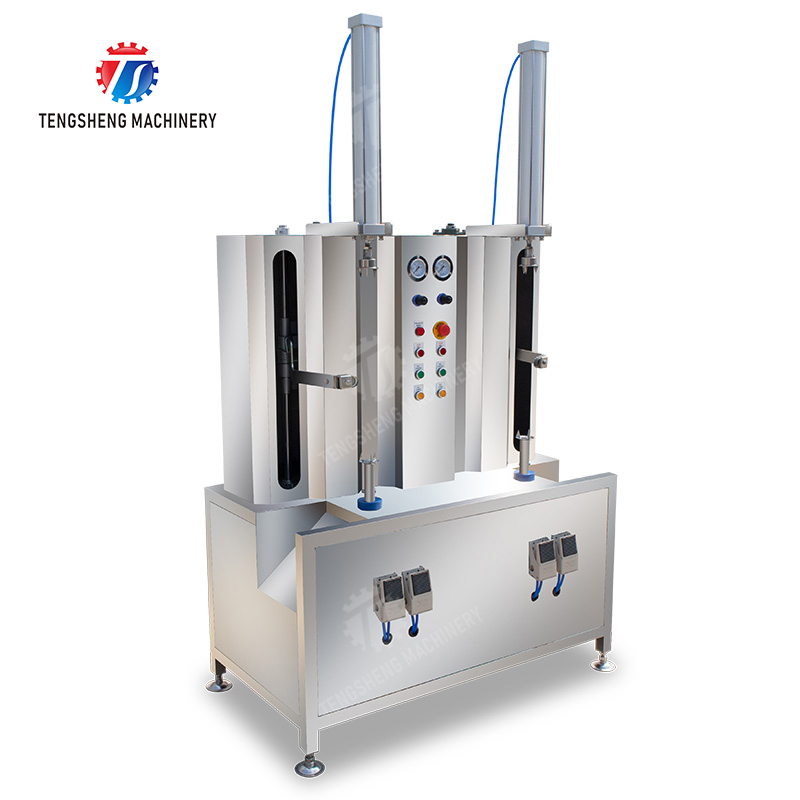
A melon peeling machine earns its name from watermelon lines, yet the same cabinet processes a wider fruit set than most buyers expect. A produce plant running cantaloupe and watermelon through one melon peeling machine kept peel waste tight while protecting flesh yield, and that result points to a simple rule: compatibility follows skin thickness, fruit firmness, and diameter more than species. Operators sizing a melon peeling machine for the first time should start from the thick-rind fruits and expand outward.
Watermelon and cantaloupe present thick, intact rinds that a melon peeling machine removes without biting into the edible layer. The cutter follows the round profile, and flesh loss stays minimal. Cantaloupe netting adds mild resistance, but the same pressure setting works for both fruit types on a single melon peeling machine. The rind also acts as a stable backing, which is why these two fruits form the baseline that every other candidate is measured against before a run starts.
Honeydew and Galia melons share the firm rind profile, so a melon peeling machine handles them on the watermelon program. Firm apples and pears with tight skin also run when the pressure arm is set for a harder surface. A Tengsheng melon peeling machine pairs a stainless cutter head with an adjustable arm, which makes these firmer fruits easier to tune. Pears and papaya sit at the soft end and need reduced blade pressure plus slower rotation; a mango peels cleanly only when firm and unbruised, because a soft specimen collapses under standard settings.
Oranges, mandarins, and lemons tear because the skin offers no firm backing. A melon peeling machine built for thick rinds shreds citrus peel and exposes pith, raising waste and contamination risk. Citrus belongs on a dedicated citrus peeler, not a melon program, because the cutter cannot support a thin, yielding skin. Forcing citrus through also leaves oily residue that later transfers to melon runs if the head is not fully cleaned between batches on the floor.
An overripe melon or mango loses internal structure and deforms against the cutter, so the melon peeling machine removes uneven layers, cutting into flesh on one side and leaving skin on the other. Ripeness control matters more than tuning here. Loading watermelon and papaya in one cycle forces the cutter to alternate pressure mid-run, which it cannot do per fruit without a manual reset. Batch separation by fruit type keeps peel quality consistent and reduces jamming at the discharge point.
A melon peeling machine using a rotating knife arm shaves a thin, even layer and suits firm melons. Abrasive-drum models scrub skin from softer fruit but risk heating the surface. The choice sets which fruits stay compatible, and a melon peeling machine with a swappable head lets one line serve both cantaloupe and papaya. Knife arms also leave a cleaner edge, which matters when the peeled fruit is packed whole rather than diced further downstream in the plant.
Most melon peeling machine models accept a diameter band, often near 80 to 220 millimeters. Fruit outside that band rides off-center, so small plums or large pumpkins fall outside the safe range. Matching fruit size to the melon peeling machine window prevents uneven peeling, and an adjustable cup handles the upper end better. Wet fruit slips on the holding cup while a lightly dried surface holds steady, so a short pre-drain after washing helps the cutter track the round profile.
Food-contact parts must meet 3-A Sanitary Standards and NSF/ANSI 169 for special-purpose food equipment. A compliant melon peeling machine uses stainless steel with polished, cleanable seams, which protects fruit from bacterial harborage during long runs. Tengsheng ships each melon peeling machine finished to these specs so the equipment passes most third-party audits. Material choice also drives washdown life, because rough welds trap soil that sanitizer cannot reach between batches on a busy floor.
ISO 22000 guides the process controls, and OSHA 29 CFR 1910 covers operator safety around rotating parts. Before each run, inspect the cutter for nicks, confirm the guard is fixed, and sanitize the contact path. After the batch, dismantle the head, brush the blade, and dry all parts. Monthly bearing checks keep the melon peeling machine accurate and extend its life, while a logged maintenance sheet helps prove due care during food-safety reviews and customer audits alike.
Commissioning the cabinet against a written fruit spec prevents most field problems. Map the expected diameter range and ripeness window first, then set pressure and rotation before the first run rather than mid-shift. Operators should keep a short log of fruit size and peel quality, because a drift in that record is the earliest sign the cutter needs attention. Store one spare blade and one spare bearing on the shelf so a worn part never forces a stop during peak season. Train staff to read the gap and the guard position, not just the timer, since fruit firmness changes with weather and storage. A brief weekly review of the log keeps yield steady and stops small habits from eroding performance. At season end, strip and inspect the head, then confirm the equipment still meets the original tolerance before the next campaign begins. Document the final settings so the next run starts from a proven baseline rather than a guess.
Question: Can a melon peeling machine peel oranges and lemons?
Answer: A melon peeling machine is not suited to thin-skinned citrus. Oranges and lemons lack the firm rind backing that the cutter needs, so the blade tears the peel and exposes bitter pith. Citrus should run on a dedicated citrus peeler with a gentler mechanism. Using a melon program on citrus raises waste and contamination risk without improving speed, yield, or the cleanliness of later fruit batches.
Question: Which melons give the cleanest peel results?
Answer: Watermelon, cantaloupe, honeydew, and Galia melons give the cleanest results on a melon peeling machine. Their thick, intact rinds let the cutter follow the round profile without biting flesh. Firm, unbruised fruit of consistent size peels most evenly. Softer varieties need reduced pressure and slower rotation to avoid collapse during the run, and sorting by ripeness keeps the peel line steady.
Question: How firm should fruit be before peeling?
Answer: Fruit should be firm enough to hold its shape against light finger pressure. A melon peeling machine relies on that structure to keep the cutter from sinking into flesh. Overripe or soft fruit deforms, causing uneven layers and higher waste. A simple ripeness check before loading protects yield and keeps the peel line consistent across the whole batch from start to finish.
Question: What diameter range fits most machines?
Answer: Most melon peeling machine models accept fruit within a diameter band, commonly around 80 to 220 millimeters. Fruit smaller than the lower limit rides off-center, while larger fruit jams the holder. Sorting by size before the run keeps each piece centered and helps the cutter remove an even skin layer without striking edible flesh or tearing the rind during operation.
Question: How often should the cutter be cleaned?
Answer: The contact path should be sanitized before every run and fully dismantled after each batch. A melon peeling machine processes moist fruit, so residue builds quickly on the blade and cup. Daily brushing, a food-safe sanitizer, and thorough drying prevent bacterial growth. Monthly bearing and alignment checks sustain peel accuracy and keep the cabinet running safely.
Question: Does a melon peeling machine handle mixed fruit batches?
Answer: A melon peeling machine performs best with single-fruit batches. Mixed loads force the cutter to face changing skin thickness and firmness without per-fruit adjustment, which produces uneven peeling and jams. Separating watermelon, cantaloupe, and softer fruit into dedicated runs keeps peel quality stable and reduces stoppages at the discharge point of the line.

Copyright © 2024 Zhaoqing Tengsheng Machinery Co., Ltd all rights reserved - Privacy policy