
High-capacity industrial juicers for beverage factories
A high-capacity industrial juicer is not simply a larger version of a café machine. In a beverage factory, it is one part of a controlled process that starts with incoming fruit and ends with a stable, cleanable stream for blending, treatment, filling, or further processing. The right industrial juicer is therefore chosen against raw-material behavior, operating hours, sanitation routines, and the pace of the full line.
As food-processing equipment advisers, we see a recurring issue: procurement teams compare a nameplate rate before they map the actual production sequence. That can make an industrial juicer look suitable on paper while washdown time, feed consistency, pulp handling, or downstream waiting reduces its usable output. A more reliable approach is to define the process first and select the industrial juicer as a fit within it.
Start with the beverage process, not the machine brochure
Before comparing an industrial juicer, document what arrives at the extraction area. Is the plant running citrus, apples, berries, mixed fruit, or a changing seasonal program? Fruit size, peel condition, temperature, ripeness, and foreign-material control all affect how consistently material reaches the machine. A line that receives washed and graded fruit has a different requirement from one that expects the industrial juicer to cope with wide variation at the infeed.
Then trace the product route: receiving, washing, sorting, preparation, extraction, pulp separation, collection, transfer, and cleaning. This process map identifies line connections that deserve attention. For example, an industrial juicer may have adequate extraction capacity, yet the whole line can still slow if the washing section releases fruit in batches, the juice tank cannot accept the flow, or pomace removal requires frequent stops.
- Define each fruit type, its expected condition, and planned production window.
- Record the upstream feed rate and whether it is continuous or batch-fed.
- Confirm where juice, foam, seeds, peel, and pomace go after extraction.
- Assign realistic time for changeover, inspection, cleaning, and restart.
Translate capacity into usable line throughput
Capacity should be treated as a production calculation, not a single headline number. Ask an industrial juicer supplier how the stated rate was established: which raw material, what feed condition, what extraction setting, and what operating duration were used? Those details matter because usable throughput is affected by stops, product variation, cleaning intervals, and the performance of connected equipment.
A practical review starts with the target beverage volume per shift, then works backward through anticipated yield, planned running time, and an allowance for normal interruptions. The goal is not to chase the highest possible instantaneous rate. It is to select an industrial juicer that can keep a stable flow without overloading the washer, separator, transfer pump, or filling schedule.
During a factory acceptance discussion, request a trial plan that uses representative fruit rather than an ideal sample only. Observe the material entering the industrial juicer, the extracted juice stream, the condition of the discharged solids, and the time required to inspect and clean contact areas. This gives operations teams a more useful basis for comparison than a capacity figure alone.
Match the extraction method to the fruit and product target
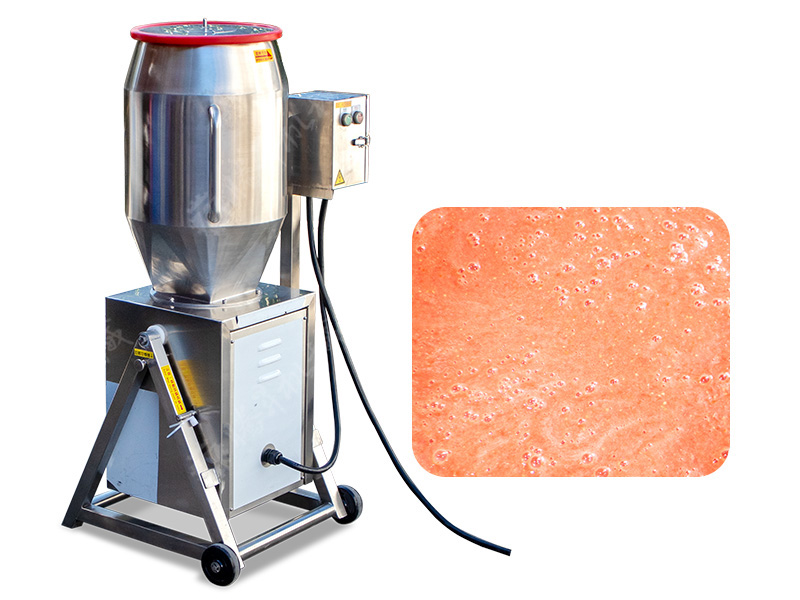
Different fruit categories place different demands on an industrial juicer. Citrus processing may focus on controlled fruit presentation and peel management. Firm fruits may require preparation before extraction. Softer fruit or pulpy recipes can raise questions about screen selection, separation, and how solids are handled after the industrial juicer. The required beverage texture and downstream treatment method should guide the discussion.
Ask for a clear explanation of the machine’s intended feed material, extraction path, and adjustment points. If one line will run several fruits, clarify the cleaning and changeover sequence for each recipe. It is also worth confirming what happens when fruit quality shifts during a season. An industrial juicer that is easy to tune and inspect can be more useful than one with a broad claim but limited operating visibility.
Evaluate sanitary design as an operating requirement
Food-contact equipment should be assessed for cleanability, drainage, corrosion resistance, and access to areas where residue can collect. In the United States, 21 CFR 110.40 describes equipment and utensils as corrosion-resistant, nontoxic, and designed to withstand their intended environment. For a beverage factory, that context turns sanitary design from a purchasing preference into an everyday operational issue.
When reviewing an industrial juicer, look beyond external panels. Ask the team to show contact surfaces, removable parts, seals, screens, drainage points, and the route used for cleaning. Check whether inspection can be completed without awkward access or extended disassembly. An industrial juicer that supports repeatable cleaning routines helps the plant document consistent work across shifts.
Juice processors also need to place equipment decisions within their facility hazard analysis. U.S. 21 CFR Part 120 uses HACCP principles for juice processing, but it does not mean an individual industrial juicer establishes compliance on its own. The processor should review its product, process controls, cleaning procedures, and validation responsibilities with its food-safety program.
Check line connections before committing to a layout
Single-machine performance does not equal line performance. A high-capacity industrial juicer needs the right connections on both sides: fruit preparation and feeding upstream, plus juice collection, pumping, filtration or separation, and solids removal downstream. Measure available floor space, operator paths, utility locations, drain placement, and access for maintenance before finalizing an equipment arrangement.
Connection questions should be specific. Can the feeder maintain an even presentation of fruit? Is the collection vessel sized for expected flow changes? Where does foam go? Can operators clear a temporary blockage safely? How will solids be moved out without crossing clean zones? These details turn an industrial juicer proposal into a workable production plan.
Use a structured factory trial and acceptance checklist
A useful evaluation combines engineering, quality, maintenance, and operations input. Rather than making a decision after a short demonstration, use representative material and record what the industrial juicer does during startup, stable operation, a feed variation, a planned stop, and cleaning. This makes trade-offs visible early.
| Review area | Questions for the factory team |
|---|---|
| Raw material | Which fruit conditions and size range will the industrial juicer see in routine production? |
| Output | What stable hourly flow is needed after normal stops and product changes? |
| Hygiene | Which contact areas must be inspected, cleaned, drained, and documented? |
| Integration | Can the upstream and downstream equipment sustain the industrial juicer’s operating pace? |
| Support | Which wear items, training steps, and service access are needed for the planned schedule? |
Plan for stable production rather than peak speed
For beverage factories, the right industrial juicer supports a repeatable operating rhythm: predictable feeding, accessible cleaning, controlled discharge, and clear communication with the next process. This may mean selecting capacity with a sensible margin rather than maximizing headline speed. It may also mean improving fruit preparation or solids handling before changing the extraction machine.
Zhaoqing Tengsheng Machinery Co., Ltd serves food-processing and central-kitchen equipment applications. For an industrial juicer project, prepare your fruit list, target shift volume, layout constraints, utility information, and sanitation expectations before requesting a technical discussion. With those inputs, the conversation can focus on fit, verification, and the practical conditions that make beverage production more consistent.