
Key advantages of an automated vegetable processing line
For a central kitchen, prepared-food plant, school or factory canteen, the value of a vegetable processing line is not simply that it puts more machines on the floor. Its value is in connecting repetitive preparation steps into a controlled flow. When washing, cutting, conveying, dewatering and handoff to the next operation are planned as one system, managers can see where time, handling and inconsistency enter the process.
That distinction matters. A stand-alone machine may perform well in isolation, yet the overall workflow can still pause while operators wait for produce, move tubs, clear buildup or prepare the next batch. An automated vegetable processing line does not remove the need for people or process control. It can, however, reduce unnecessary handoffs and give the team a clearer way to manage the work that remains.
1. A vegetable processing line turns separate tasks into one visible workflow
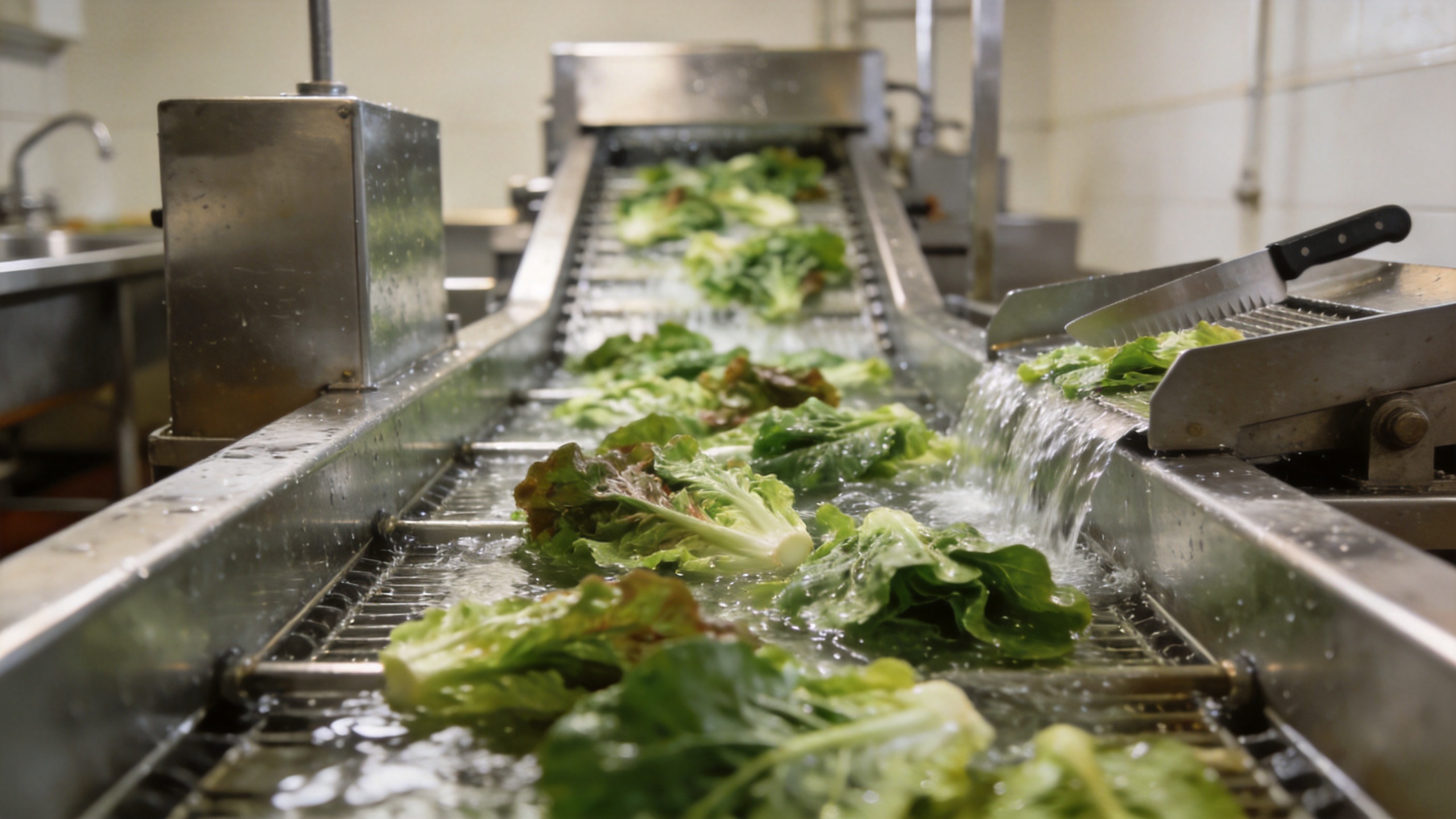
Vegetable preparation normally follows a sequence: receiving, sorting, washing, cutting or slicing, rinsing where needed, dewatering, inspection and transfer to packing or cooking. When these stages are treated as isolated jobs, each handoff can become a delay or a quality variable. A vegetable processing line makes the interfaces between stages part of the design conversation.
For example, an upstream wash stage has to supply produce at a pace that the cutting stage can accept. The cut product then needs a practical route to the next step without excessive manual transfer. This is why process designers look beyond a single machine’s nominal output. They observe how material enters each station, whether product accumulates at an interface, and whether the downstream team can keep the flow moving.
That visibility can be useful even before a facility chooses full automation. It helps a food processor map the present workflow, identify repeated waiting points and decide which connection deserves attention first.
2. More consistent preparation starts with more repeatable handling
Manual preparation depends on many small, variable actions: loading, cutting, transferring and checking. A vegetable processing line can organize those actions around defined stations and repeatable handoffs. The potential benefit is a steadier process for operations that prepare the same kinds of vegetables across multiple batches or shifts.
Consistency should not be confused with a promise that every raw vegetable will behave identically. Size, maturity, moisture, leaf condition and incoming cleanliness can still change how produce moves through a line. The more useful question is whether the line gives operators a stable method for handling those variations. In practice, teams should watch both the finished cut and the way product leaves each station, not just the amount processed.
For menus with multiple vegetable types or frequent cut-size changes, the evaluation should also include changeover steps. A configuration that supports the current process but takes too long to clean, adjust or verify between products may create a different bottleneck later in the day.
3. Better labor allocation, not a claim that labor disappears
A key advantage of a vegetable processing line is that it can shift repetitive transport and routine handling away from manual work. That may let trained staff focus on receiving checks, quality observation, batch records, packing coordination or exception handling. For central kitchens and food-service chains, this can make staffing conversations more concrete because the process is organized around stations rather than ad hoc movement between tables and containers.
Automation is not a universal substitute for labor. Someone still needs to load material correctly, monitor product flow, verify cut quality, clean accessible areas and respond when raw material conditions change. The operational advantage is usually clearer role definition and fewer avoidable movements, not an unsupported promise of fixed labor savings.
4. Hygiene planning can be built into the flow
Fresh-produce operations need sanitation controls that fit the actual sequence of receiving, washing, processing and handling. Food-safety guidance for fresh fruits and vegetables emphasizes managing microbial hazards across handling stages, while fresh-cut sanitation programs commonly rely on documented cleaning responsibilities, methods and frequencies. A vegetable processing line gives a facility a practical framework for asking where cleaning access, drainage, product contact, inspection and restart checks belong.
Before selecting a line, look closely at the areas that operators must reach: product-contact sections, transfer points, collection zones and components that require routine inspection. Ease of access can matter as much as an impressive feature list when cleaning occurs frequently. The correct procedures, chemicals and safety steps should follow the applicable site program and the equipment documentation.
5. Bottlenecks become easier to find and discuss
When a process consists of disconnected stations, a delay often appears as a general feeling that production is slow. With a vegetable processing line, the sequence is clearer: is the issue incoming material, wash time, cutting throughput, a transfer interface, dewatering, inspection or downstream packing? This does not automatically solve the problem, but it makes improvement discussions more specific.
A useful operating habit is to record when product queues form and what condition preceded them. If a cutting station repeatedly waits, the constraint may be upstream. If product builds up after cutting, the limitation may lie in transport or the next process. Reviewing the flow from upstream to downstream is usually more productive than repeatedly changing one machine setting.
6. The line can support a staged path to automation
Facilities may not need to install every possible module at once. Some begin by stabilizing a key preparation stage, then evaluate conveyor connections, washing capacity, dewatering or sorting as volumes and product mix develop. A staged approach can be sensible when the facility is still confirming raw-material conditions, available floor space, drainage, utilities and the required relationship to packing or cooking.
For Zhaoqing Tengsheng Machinery Co., Ltd, the relevant discussion begins with the food-processing workflow rather than a generic automation claim. The company’s stated product scope includes vegetable washing machinery and customized food processing lines for food processors, chains, central kitchens, schools, factories and prepared-food plants. The practical next step is to clarify the vegetable types, target finished state, desired flow, sanitation routines and site interfaces before defining a configuration.
What to confirm before planning a vegetable processing line
- Raw material: Which vegetables will enter the process, and how variable are their size, condition and incoming cleanliness?
- Finished requirement: What cut form, wash outcome, moisture condition and downstream destination are required?
- Process rhythm: When and where do queues, manual transfers or waiting periods occur during a normal shift?
- Changeovers: How often will product types change, and what cleaning, verification and adjustment steps are needed?
- Site conditions: What floor layout, drainage, utility connections, access routes and operator space are available?
- Control and maintenance: Who will monitor the flow, complete routine cleaning and record exceptions?
Conclusion
The strongest advantage of an automated vegetable processing line is not automation for its own sake. It is the ability to make preparation, handoffs and sanitation planning more deliberate across the full workflow. When the line is matched to the vegetables, production rhythm, cleaning needs and site layout, it can help a facility pursue a more organized and repeatable process. Start with the current bottleneck, confirm the interfaces around it, and use those facts to decide whether a phased or integrated line is the better fit.