Integrating a vegetable processing machine into an existing production line requires more than simply placing the equipment at the end of a conveyor. The cutting machine is often the transformation point where whole produce becomes a finished or semi-finished product, and its performance directly affects every upstream and downstream stage. A poorly integrated vegetable processing machine can create bottlenecks, cause product quality issues from queuing and oxidation, and increase labor costs due to manual material handling between stations. This guide covers the practical steps for evaluating, positioning, and connecting a vegetable processing machine within a commercial food processing line.
Before purchasing a vegetable processing machine, you need to establish the actual throughput of your existing line in kilograms per hour of usable product. Measure the output of the stage immediately upstream, typically the washing or peeling station, and the intake capacity of the stage immediately downstream, such as dewatering or packaging. The cutting machine you select should have a rated feed capacity that matches or slightly exceeds the upstream output. For example, if your washing and peeling stages deliver 400 kg of prepared produce per hour, a cutting machine rated for 450 to 500 kg per hour provides a comfortable buffer without excessive idle capacity. Consider also the range of cut types you need. Machines like the TS-Q118B dual-head vegetable cutting machine can perform multiple cutting functions simultaneously, with one head processing leafy vegetables and the other handling root vegetables, which reduces the number of machines required for a mixed-product line. The TS-Q180 high-speed dicing and slicing machine, built with a SUS304 stainless steel frame, offers dicing and strip cutting in a single pass and is rated to replace the output of approximately 25 manual workers, making it suitable for high-volume central kitchens and food factories.
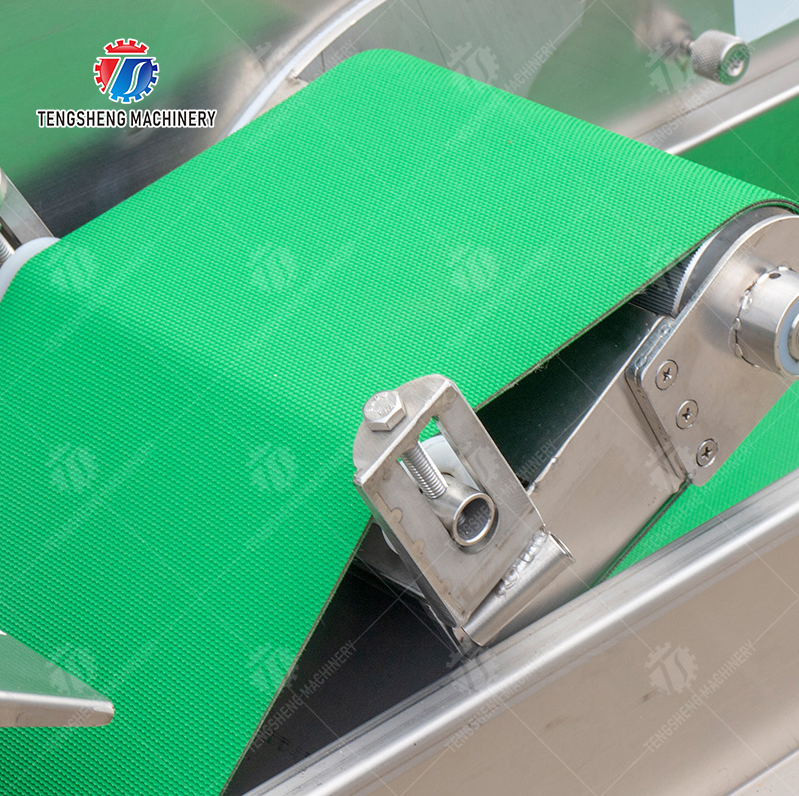
The physical connection between your vegetable processing machine and adjacent equipment determines how smoothly product flows through the line. Three integration approaches are common in commercial facilities. First, direct conveyor feed uses a belt conveyor to deliver washed and peeled produce directly into the cutting machine feed chute, requiring precise height alignment and a feed rate controller to prevent overloading. Second, gravity feed uses an elevated platform or mezzanine where upstream equipment deposits product into a hopper above the cutter, allowing gravity to maintain a consistent feed. Third, manual feed relies on operators to load the cutting machine, which is practical for batch operations or low-volume lines but introduces labor variability. For continuous lines, direct conveyor or gravity feed is strongly recommended. The feed chute dimensions of the cutting machine must accommodate the maximum produce size in your product mix. If your line processes whole pumpkins or large cabbage heads, ensure the machine inlet can accept them without pre-cutting, which would add an extra labor step.
A vegetable processing machine requires properly planned utility connections to operate safely and continuously. Electrically, the machine must be connected to a circuit that matches its voltage and amperage requirements, with appropriate overload protection. For facilities with three-phase power, confirm that the cutting machine motor is compatible with your available phase configuration. Water connections may be needed for machines that use water spray to lubricate blades during cutting, flush cut product through discharge chutes, or clean internal components between batches. Drainage is equally important: the area around the cutting machine should have floor drains capable of handling washdown water volume, and the machine itself should have a drainage port that connects to your facility wastewater system. If your line includes a blanching station before cutting, ensure the cutting machine can accept produce at elevated temperatures without warping internal components or compromising blade hardness.
The cut quality produced by your vegetable processing machine affects downstream operations and final product appearance. Dull or incorrectly selected blades produce ragged cuts that release more cell sap, leading to faster browning and shorter shelf life in packaged cut vegetables. Machines that use replaceable blade sets, such as the TS-Q1500A high-speed julienne machine with its one-piece cutting tools, allow operators to switch between julienne, slice, and dice cuts by swapping blade cartridges rather than changing machines. When integrating a cutting machine into a multi-product line, evaluate the changeover time between cut types. A machine that requires 30 minutes for blade replacement and recalibration may be acceptable for lines running one product per shift, but will create significant downtime for facilities that change products multiple times per day. Look for machines with tool-less or quick-change blade systems, and confirm that replacement blades are available from the manufacturer on short lead times.
A frozen vegetable processing facility producing cut carrots and potatoes for institutional foodservice needed to replace an aging cutting station. The existing line delivered 350 kg of washed and peeled root vegetables per hour from the upstream peeler. The facility selected a TS-Q180D large dicing machine with SUS304 stainless steel construction and a composite blade system capable of producing dice, strips, and slices in a single pass. The machine was positioned on a platform 15 cm above the downstream conveyor to allow gravity discharge of cut product directly onto the dewatering belt. A variable-frequency conveyor feeder was installed between the peeler discharge and the cutter inlet to regulate feed rate and prevent surge loading. After integration, the line achieved 340 kg per hour of finished cut product with a 3 percent reduction in cut irregularity compared to the previous machine. The composite blade required replacement every 60 operating hours, and the facility maintained two spare blade sets in inventory to minimize downtime.
Integrating a vegetable processing machine into a line also means integrating it into your facility's safety and sanitation protocols. The machine should be positioned with adequate clearance on all sides for cleaning, blade changes, and maintenance access. A minimum of 80 cm clearance on the sides where blades are accessed and 60 cm at the rear for motor and electrical access is recommended. Machines with microswitch safety interlocks at the feed inlet, such as the TS-Q180, prevent operation when the feed cover is open, protecting operators from contact with moving blades. For sanitation, the machine should have smooth, weld-free surfaces in product contact zones, rounded corners that prevent product accumulation, and drainage ports that allow effective washdown. SUS304 stainless steel construction provides corrosion resistance against acidic vegetable residues and cleaning chemicals, extending equipment life in high-moisture environments. Establish a daily cleaning protocol that includes flushing the cutting chamber, removing and sanitizing blade sets, and inspecting drive components for product residue buildup.
How much space should I leave around a vegetable processing machine for maintenance?
A minimum of 80 cm clearance is recommended on the sides where blades are accessed and changed, and 60 cm at the rear for motor and electrical panel access. If the machine uses water spray or washdown, ensure the surrounding floor has proper drainage and non-slip surfacing to prevent workplace accidents during cleaning.
Can I feed different vegetable sizes into the same cutting machine?
Most commercial vegetable processing machines can handle a range of produce sizes, but the feed chute has a maximum opening dimension. If your product mix includes items larger than the chute opening, you will need to pre-cut those items manually, which adds labor. When selecting a machine, confirm that the inlet dimensions accommodate the largest produce in your product mix without pre-cutting.
How do I prevent product oxidation between peeling and cutting stages?
Minimize the distance and time between the peeler discharge and the cutting machine feed. Use a conveyor with a cover to protect produce from air exposure, and consider a water spray on the conveyor to keep surfaces wet. If a buffer hopper is used between stages, keep it small and ensure first-in-first-out flow so no product sits longer than necessary. Processing produce at cooler temperatures also slows oxidation.

Copyright © 2024 Zhaoqing Tengsheng Machinery Co., Ltd all rights reserved - Privacy policy