A fruit and vegetable processing line is the backbone of any commercial food preparation facility, whether you operate a central kitchen supplying ready-to-cook produce, a frozen vegetable plant, or a fresh-cut salad packaging operation. The efficiency of that line determines your cost per kilogram of finished product, your ability to meet order deadlines, and ultimately your competitiveness in the market. Optimizing a processing line means examining each station, from raw material intake to final packaging, and identifying where bottlenecks, waste, or equipment mismatches are quietly eroding your margins.
The first step in optimization is to map every stage of your fruit and vegetable processing equipment workflow in sequence. A typical line includes raw material receiving and sorting, washing, peeling, cutting or slicing, blanching, dewatering, air drying, and packaging. At each stage, you need to measure actual throughput in kilograms per hour and compare it to the rated capacity of the equipment. The station with the lowest real throughput is your bottleneck, and no amount of investment in other stages will increase overall line output until that station is addressed. Common bottlenecks appear at the washing stage when bubble washers cannot keep up with high-volume peelers, or at the cutting stage when a single vegetable cutting machine becomes a chokepoint because downstream dewatering and packaging are faster. A practical approach is to time each stage over a full shift and record the queue of work-in-progress building up before and after each machine.
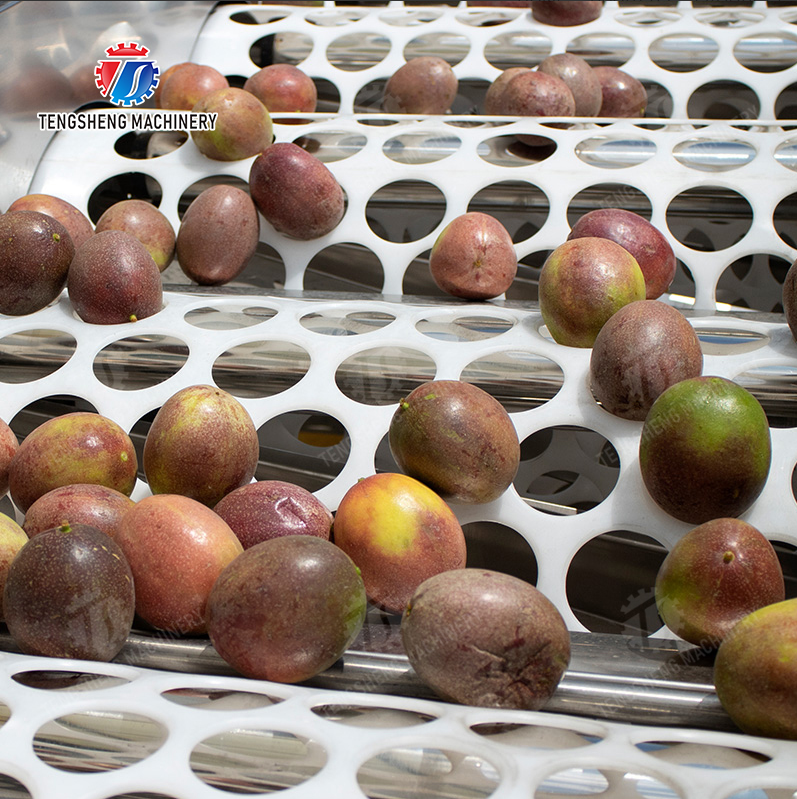
The washing stage sets the cleanliness baseline for the entire line. Fruit and vegetable processing equipment commonly uses three washing technologies: bubble washing, vortex washing, and brush roller washing. Bubble washers, such as the TS-X400 and TS-X300 series, use air agitation to loosen soil from produce surfaces and are suitable for leafy greens and delicate fruits. Vortex washers like the TS-X680D create a swirling water current that provides more aggressive cleaning for root vegetables. Brush roller washers, such as the TS-X300M series, combine water spray with mechanical brushing to remove tightly adhered soil from potatoes, carrots, and similar root crops. For lines processing multiple produce types, a sequential configuration using a bubble washer followed by a brush roller washer can handle both delicate and soiled items without changeover downtime. Adding an ozone disinfection module, as found in the TS-X400D model, can reduce microbial load at the washing stage, which is particularly valuable for fresh-cut operations where shelf life is critical.
Peeling and cutting are the stages where raw produce is transformed into saleable product, and alignment between these two stations is essential. If your peeling machine produces peeled product faster than your cutting machine can process it, you face work-in-progress accumulation that leads to oxidation, discoloration, and quality degradation. Conversely, if cutting capacity exceeds peeling output, the cutting machine sits idle, wasting energy and labor. When selecting fruit and vegetable processing equipment, consider the peel loss rate of your peeler and match its usable output to the feed capacity of your cutter. For example, a roller peeler operating at 500 kg per hour with a 12 percent peel loss delivers approximately 440 kg of peeled product per hour, which should align with a cutting machine rated for at least 450 kg per hour to maintain continuous flow. The TS-Q180 high-speed dicing and slicing machine, which can replace the output of approximately 25 manual workers, is designed for central kitchens and food factories where high throughput at the cutting station is essential. Its SUS304 stainless steel frame and microswitch safety at the feed inlet make it suitable for continuous commercial operation.
After cutting, excess surface moisture must be removed before packaging to prevent clumping, bacterial growth, and shelf life reduction. A vegetable dehydrator uses centrifugal force to spin off water from cut produce, while an air drying machine uses forced ambient or chilled air across a conveyor belt. The key is to size the dewatering and drying equipment to match the output rate of the cutting station. If the dehydrator is too small, cut product queues on conveyors and begins to oxidize. If the air dryer belt is too short, product enters packaging with residual moisture that compromises quality. Packaging equipment should be positioned immediately downstream of drying with minimal conveyor distance to prevent recontamination. For facilities processing multiple product types, modular fruit and vegetable processing equipment that can be reconfigured for different produce sizes and shapes without lengthy changeover is preferable to fixed, single-product lines.
Consider a central kitchen supplying cut vegetables to a chain of 30 restaurants. The original line used a single bubble washer, a batch potato peeler, and two manual cutting stations, achieving a total output of approximately 200 kg per hour. The washing stage was the bottleneck, as the bubble washer could only process 250 kg per hour of mixed produce while the peeler and cutters waited. By adding a brush roller washer in sequence after the bubble washer, the combined washing throughput increased to 400 kg per hour. The batch peeler was replaced with a continuous roller peeler, and the two manual cutting stations were consolidated into one TS-Q180 dicing and slicing machine. After reconfiguration, the line achieved 380 kg per hour of finished cut product, nearly doubling output without adding floor space. The investment paid for itself within 14 months based on labor savings and reduced raw material waste from oxidation during queueing.
Optimization is not a one-time event. Once your fruit and vegetable processing equipment is configured for balanced throughput, ongoing monitoring is needed to detect gradual changes in performance. Roller wear on peeling machines, blade dulling on cutting machines, and scale buildup in washing tanks all reduce efficiency over time. Implementing a simple daily log of throughput per station, peel loss percentage, and reject rate allows facility managers to spot trends before they become costly problems. When evaluating new equipment, prioritize machines with accessible maintenance points, readily available replacement parts, and frequency-controlled motors that allow speed adjustment to match upstream and downstream conditions. Manufacturers such as Zhaoqing Tengsheng Machinery produce a range of washing, peeling, cutting, drying, and packaging equipment designed to be integrated into modular lines, which simplifies both initial configuration and future expansion.
What is the most common bottleneck in a fruit and vegetable processing line?
The washing stage is frequently the bottleneck because buyers often invest in high-capacity peelers and cutters but undersize the washing equipment. A bubble or brush roller washer that cannot match the throughput of downstream machines causes work-in-progress accumulation and reduces overall line efficiency. Always size the washing stage to handle at least 110 percent of the peeler's rated input capacity.
How do I match peeling output to cutting capacity?
Calculate the usable output of your peeler by subtracting the peel loss rate from the raw input rate. For example, a peeler processing 500 kg per hour with a 12 percent peel loss produces 440 kg of peeled product. Select a cutting machine rated for at least that figure, preferably 10 percent higher to account for feed irregularities and produce shape variations.
Can I use one processing line for different fruits and vegetables?
Yes, if the equipment is modular and configurable. Bubble washers handle delicate produce while brush roller attachments can be added for root vegetables. Cutting machines with interchangeable blade sets can switch between slicing, dicing, and julienne cuts. The key is to minimize changeover time and ensure that each machine can accommodate the size range of your produce mix without requiring different feed mechanisms.
Copyright © 2024 Zhaoqing Tengsheng Machinery Co., Ltd all rights reserved - Privacy policy